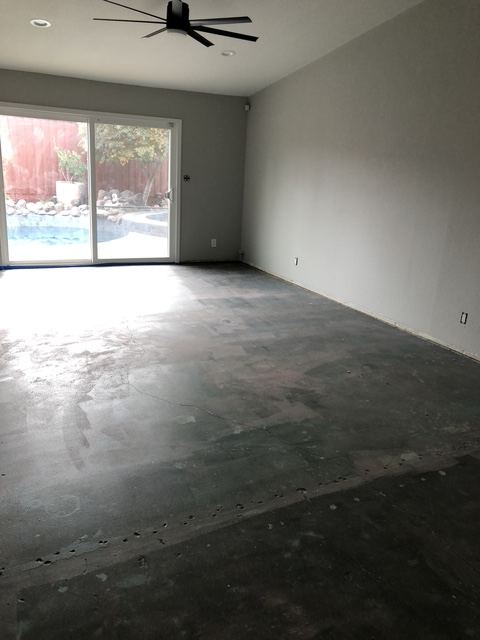
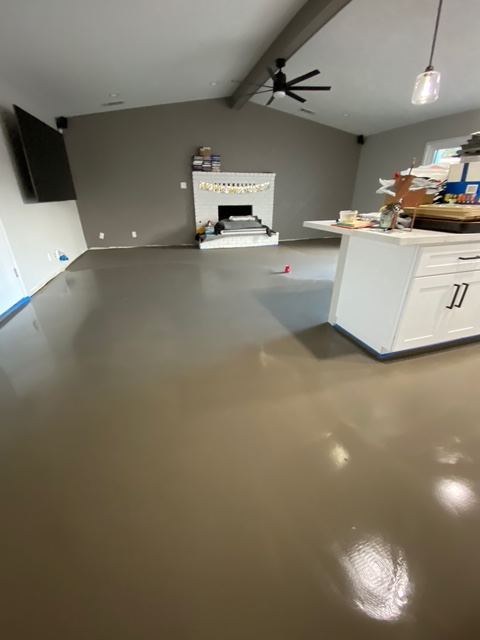
We use professional self-leveling compounds to create a flat, stable surface before installing hardwood, LVP, laminate, tile, or other flooring. This helps eliminate uneven areas, improves the finished appearance, and ensures long-term durability.
Why Self-Leveling Matters
- Flat, even flooring. Dips and high spots in a concrete subfloor telegraph through almost every finished flooring type.
- Long-term durability. New flooring installed over an uneven base wears unevenly and fails sooner.
- Compatible with what you're installing. Whether it's hardwood, LVP, laminate, or tile, a flat subfloor is part of doing the installation right.
This is typically done as part of the prep work before installation — see our Floor Preparation page for the rest of what goes into getting a subfloor ready, or our Installation page for the full process.
Common Questions
How do I know if I need self-leveling? If you can see or feel dips, humps, or slopes in your concrete subfloor, it's worth having us check during your on-site estimate before any flooring goes down.
Does this work under any flooring type? Yes — self-leveling compound creates a flat base suitable for hardwood, LVP, laminate, tile, and most other flooring types.